Tahoe City Wildfire Insurance Homes: Defensible Space Tips
May 7, 2026
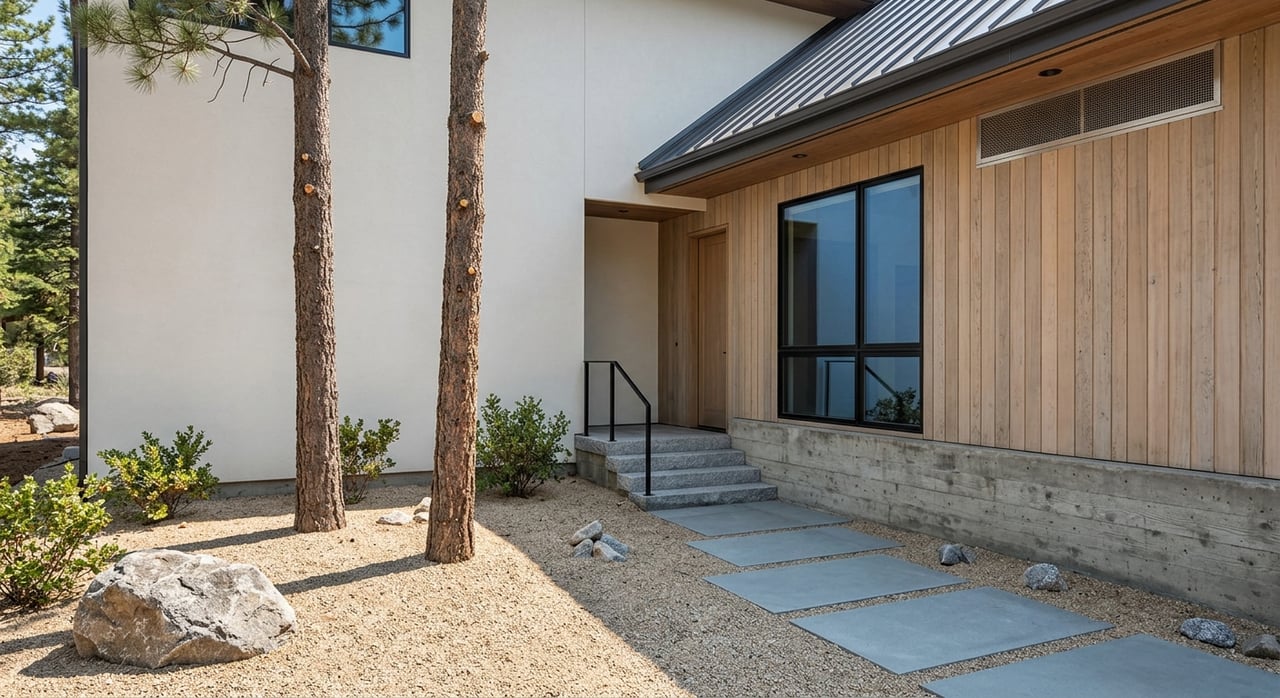
May 7, 2026
If you own a home in Tahoe City, wildfire prep is not a side project. It is part of protecting your property, keeping up with local requirements, and getting ahead of insurance questions before they become a problem. Whether you are buying, selling, or maintaining a second home, understanding defensible space and home hardening can help you make smarter decisions. Let’s dive in.
In the Tahoe Basin, wildfire risk is not only about flames reaching a home. Ember exposure is often a major concern, which is why the area closest to the structure matters so much.
CAL FIRE says defensible space is the buffer between a structure and the surrounding vegetation. It also says defensible space, combined with home hardening, gives a house the best chance of surviving wildfire.
That message is especially relevant in Tahoe City. TRPA notes that defensible space is critical in the Tahoe Basin, and reports that 75% of homes that survived the Angora Fire had some form of defensible space.
If you only remember one wildfire-prep detail, make it this one. CAL FIRE says the first five feet around your home is the most important zone.
This area is sometimes called the ember-resistant zone. In practical terms, that means reducing anything that can easily ignite right next to the house.
In that first 5-foot zone, CAL FIRE recommends:
CAL FIRE also advises removing branches within 10 feet of chimneys or stovepipes. If fencing, gates, or arbors are attached to the home, replacing combustible materials with noncombustible alternatives can also help where possible.
Wildfire prep does not stop at the edge of the patio. The rest of your lot matters too, especially in a forested setting like Tahoe City.
In the 5- to 30-foot area, the goal is to remove dead plants, grass, weeds, and needles. CAL FIRE also recommends keeping shrubs and trees separated so fire cannot climb from lower vegetation into tree canopies.
In the 30- to 100-foot band, CAL FIRE says annual grass should be cut to a maximum of 4 inches. Wood piles should have 10 feet of clearance, and propane tanks and outbuildings should also be kept clear.
California requires 100 feet of defensible space by law, or to the property line if the property line is closer. In Tahoe City, that can create questions on smaller or irregular lots, which is one reason local guidance matters.
One of the biggest mistakes buyers and sellers make is assuming statewide rules are the whole story. CAL FIRE notes that local fire departments and fire protection districts can set stricter standards than the state minimum.
For Tahoe City homes, North Tahoe Fire Protection District is a key local resource. The district is headquartered in Tahoe City and provides inspections, defensible-space support, and public education across the region.
North Tahoe Fire also offers free, grant-funded educational defensible-space inspections for homeowners. According to the district, those inspections can be used to help maintain homeowner insurance, and a second verification-oriented inspection may also be available when needed.
Defensible space addresses what surrounds the home. Home hardening addresses how the home itself stands up to ember exposure and ignition risk.
North Tahoe Fire and CAL FIRE both emphasize ignition-resistant construction features. These details can make a meaningful difference for both safety and insurance documentation.
Common hardening items highlighted by North Tahoe Fire and CAL FIRE include:
North Tahoe Fire also specifically points to roofs, vents, windows, fences, driveway access, and visible house numbers as part of a practical checklist. That is useful for Tahoe City owners, especially for second homes that may sit vacant for parts of the year.
Insurance is often where wildfire prep becomes urgent. In the Tahoe market, buyers and sellers are paying closer attention to mitigation because it can influence both insurability and cost.
The California Department of Insurance says mitigation actions can earn insurance discounts through its Safer from Wildfires framework. Examples include a Class-A roof, a 5-foot ember-resistant zone, ember-resistant vents, enclosed eaves, upgraded windows, cleared under-deck areas, defensible-space compliance, and some community-level mitigation participation.
CDI also says insurers must provide separate discounts or credits for each mandatory mitigation factor and must accept inspections by CAL FIRE or a local fire department as proof of completed mitigation actions. That means documentation matters, not just the work itself.
Wildfire mitigation may improve your options and may reduce premiums. It can also make a property easier to present to insurers during a purchase or renewal process.
Still, it is important to be realistic. Mitigation is not an automatic guarantee of standard-market coverage.
If a homeowner cannot obtain coverage in the standard market, the California FAIR Plan remains the fallback option. CDI also says FAIR Plan policyholders may qualify for a wildfire discount for hardening their properties.
If you plan to sell a Tahoe City home, wildfire readiness can affect your timeline and your paperwork. It can also shape how confident a buyer feels when reviewing the property.
CAL FIRE says that when a property is in a high or very high fire hazard severity zone, the sale requires documentation of a compliant defensible-space inspection. That makes early preparation especially important.
Before listing, it helps to gather:
Having these items ready can reduce back-and-forth during escrow. It also shows buyers that the home has been maintained with Tahoe realities in mind.
If you are buying in Tahoe City, especially for a second home or vacation property, wildfire due diligence should happen early. A beautiful setting among the pines is part of the appeal, but it also means you should look closely at the property’s readiness.
Ask for the latest defensible-space inspection report and a summary of home-hardening upgrades. If trees were removed, ask whether permits were required and completed.
Buyers should also ask whether the property is part of a Firewise community, whether the seller used North Tahoe Fire’s inspection or chipping programs, and whether the current insurer required mitigation verification or provided credits. These details can give you a clearer picture of both maintenance history and future insurance conversations.
Vegetation work in Tahoe City is not always as simple as trimming and hauling away material. In the Tahoe Basin, some tree-removal work may require permits.
TRPA says many tree-removal projects can be handled through defensible-space permitting, but larger removals may need TRPA approval. In general, live trees over 14 inches DBH require a permit, while lakeshore properties have a lower 6-inch DBH threshold between the house and the lake.
North Tahoe Fire also notes that its tree-removal permits are for defensible-space purposes only. If you are buying or selling a property with recent vegetation work, permit records are worth reviewing.
For buyers considering an investment or vacation-rental property, wildfire compliance may connect to local rental requirements too. This is one of those Tahoe-specific details that is easy to miss if you focus only on the house itself.
Placer County says that for short-term rentals in North Tahoe Fire’s district, North Tahoe Fire collects the fee and conducts defensible-space inspections tied to short-term rental permits. If rental use is part of your plan, ask about permit status and inspection history early in the process.
Wildfire prep can feel overwhelming, especially on larger wooded lots or homes that have been lightly used for part of the year. The good news is that Tahoe City owners have access to practical local support.
North Tahoe Fire offers free educational inspections, and it also runs a grant-funded curbside chipping program to help residents dispose of vegetation removed while creating defensible space. Those programs can help you move from a vague to-do list to a documented action plan.
Another helpful local signal is Firewise recognition. North Tahoe Fire says Firewise USA helps neighborhoods organize mitigation work, and it lists active Firewise communities in the area. For some buyers, that can be a useful indicator of ongoing community effort.
In Tahoe City, defensible space and home hardening are not just boxes to check. They are part of responsible ownership in a forested mountain market where insurance, permitting, and resale readiness often overlap.
If you are preparing to sell, this work can support a smoother transaction. If you are buying, it can help you understand the true condition and future carrying costs of a property.
The right local guidance can make a big difference, especially when you are weighing second-home use, rental plans, or a luxury property with more complex site conditions. If you want help evaluating a Tahoe City home through that lens, Becky Arnold offers local, high-touch guidance built around the realities of west-shore ownership.
Stay up to date on the latest real estate trends.

Blogs
Practical Ways to Improve Home Air Quality Year-Round.
Blogs
What to Know Before You Buy a Vacation Home in Tahoe City.

Blogs
What Every Investor Should Understand Before Buying Here.
Take a look at one of my many beautiful listings, feel free to ask questions and call me anytime to discuss the amazing opportunities and memories that await you as a homeowner on Lake Tahoe's magical west shore!